


Mobile Work Platforms for Retail, Distribution Centres & Industrial Facilities
Accessing elevated storage, shelving and equipment is a regular requirement across retail stores, distribution centres and industrial facilities. Employees frequently need to retrieve products from higher shelves, replenish inventory, conduct inspections and complete maintenance tasks. Without suitable access equipment, these activities can become time-consuming and introduce unnecessary workplace risks.
Choosing the right access equipment is therefore an important part of maintaining an efficient and organised workplace. Mobile Work Platforms provide a practical solution by combining an elevated working surface with the ability to reposition equipment around the workplace. Rather than repeatedly setting up conventional ladders or relying on unsuitable access methods, workers can use purpose-designed equipment to reach elevated areas while maintaining a more controlled working position.
In environments where employees regularly move between shelving locations, storage aisles and workstations, mobility is particularly valuable. Suitable Mobile Work Platforms can be repositioned with minimal effort, helping streamline routine activities and reduce interruptions to daily operations.
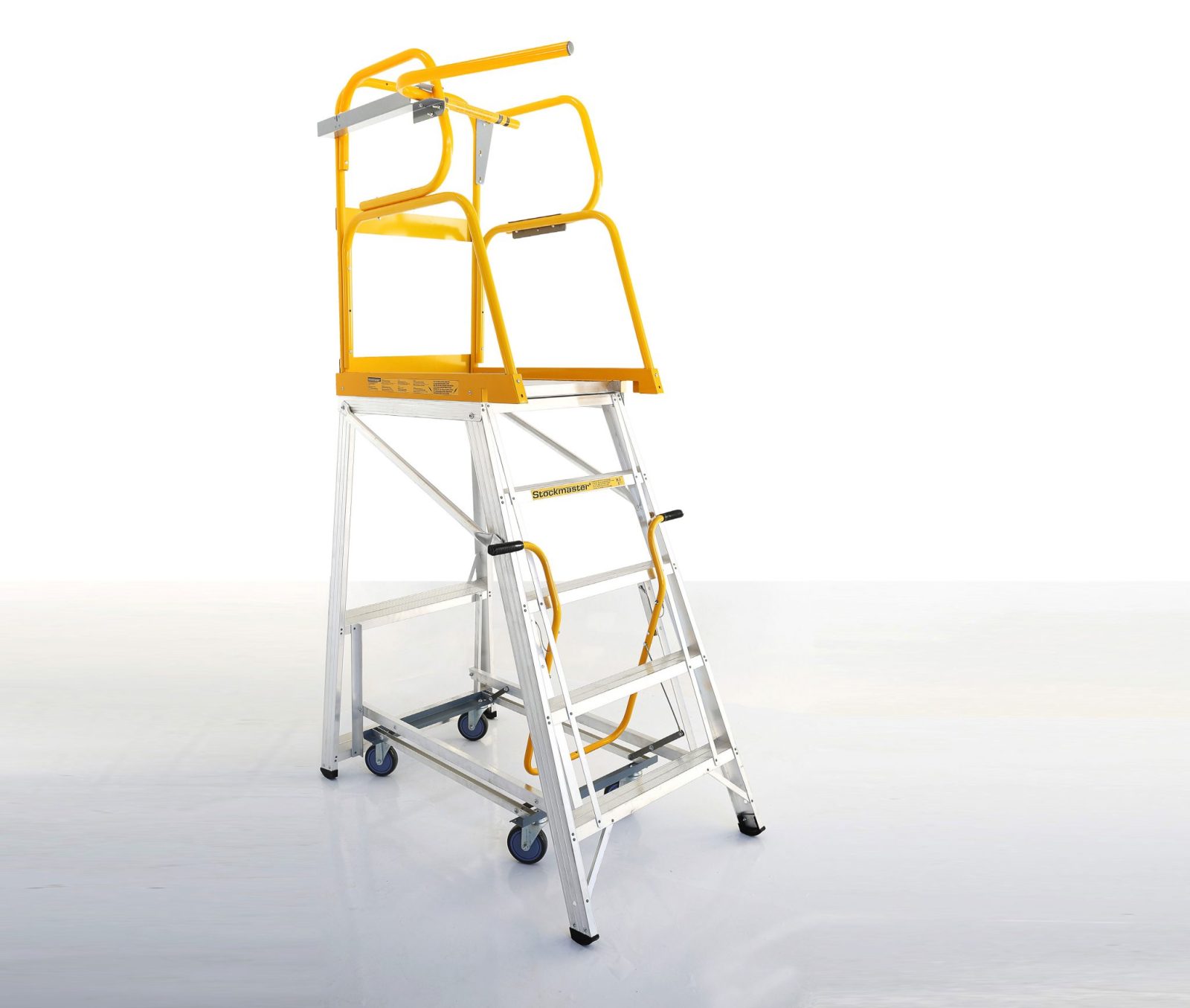
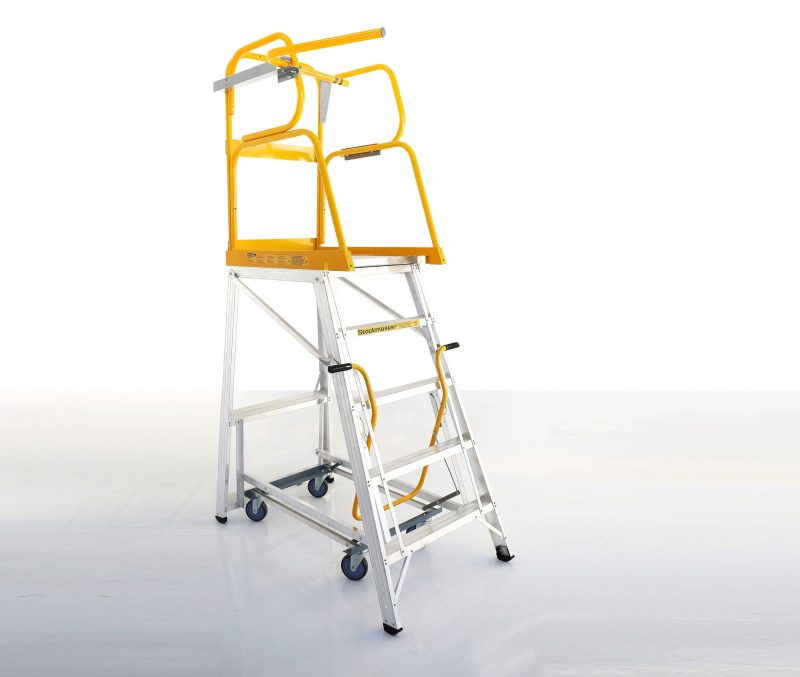
The StockMaster Navigator is designed to address these requirements. This mobile warehouse platform ladder features a single control for moving, steering and braking. Its automatic braking mechanism returns the four feet to the stationary working position when the control is released, providing a stable platform for elevated tasks.
Available through Spacepac Industries, the StockMaster Navigator is suitable for applications involving warehouse order picking, shelf stocking, inventory access and general maintenance. Its combination of mobility, automatic braking and multiple platform heights makes it a practical option for workplaces that require regular access to elevated areas.
This article explores how Mobile Work Platforms support different workplace environments, the operational advantages of the StockMaster Navigator and the considerations businesses should make when selecting suitable Mobile Work Platforms.
1. Understanding Mobile Work Platforms in Modern Workplaces
Mobile Work Platforms are designed to provide workers with access to elevated areas while allowing equipment to be moved between different work locations. Unlike conventional fixed access equipment, mobile designs can be repositioned as operational requirements change.
They are particularly useful in workplaces where employees regularly access different shelving levels, storage locations or elevated equipment.
In retail and industrial environments, these requirements can include:
- Retrieving products from higher storage shelves.
- Replenishing inventory in retail displays.
- Accessing warehouse racking and storage systems.
- Conducting routine equipment inspections.
- Completing maintenance and facility management tasks.
- Reaching elevated work areas in production and storage facilities.
The suitability of different Mobile Work Platforms depends on the task, operating environment, required working height and type of access needed.
For example, a workplace with smooth concrete flooring and closely arranged storage aisles may benefit from a highly manoeuvrable warehouse platform ladder. Facilities with uneven outdoor surfaces may require a different type of access equipment.
The StockMaster Navigator is specifically designed for warehouse applications and environments with suitable smooth, level operating surfaces. Its movement and braking system allows workers to reposition the ladder without relying on traditional spring-loaded castors or foot pedals.
This makes it particularly relevant to businesses that perform repetitive stock access activities throughout the working day.
2. Improving Stock Picking and Replenishment in Retail Environments
Retail stores require efficient inventory management to keep products available, displays organised and storage areas accessible. Employees often need to retrieve goods from overhead shelving, replenish merchandise and organise stock stored above normal reaching height.
These activities can become challenging when suitable access equipment is unavailable.
Mobile Work Platforms can help retail businesses establish a more consistent approach to elevated stock access. By providing a dedicated working platform, employees have a defined position from which to complete appropriate picking and replenishment tasks.
Accessing Higher Retail Shelving
Retail shelving systems are designed to maximise available floor space while displaying and storing products at different heights. However, reaching upper shelving levels can be difficult, particularly when products are stored above comfortable reaching height.
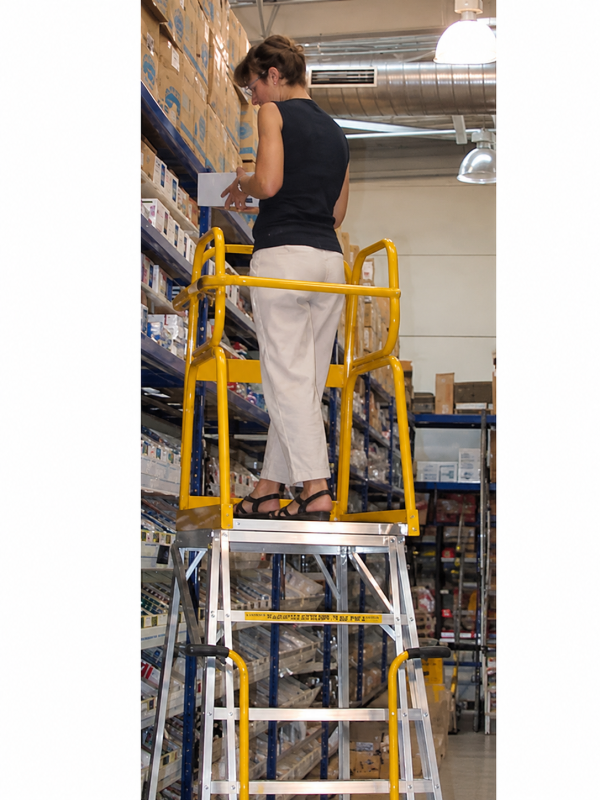
The StockMaster Navigator provides an elevated platform that allows workers to access suitable shelving locations.
Its mobile design is useful when employees need to move between different shelving bays. Instead of repeatedly carrying and positioning conventional access equipment, the Navigator can be repositioned using its integrated control system.
This can help simplify routine activities such as:
- Retrieving lightweight products from upper shelves.
- Replenishing elevated retail displays.
- Organising back-of-house inventory.
- Accessing storage areas above standard shelving height.
- Conducting visual stock inspections.
The equipment is designed for small, lightweight stock-picking tasks. Businesses should follow the manufacturer’s working-range guidance and should not use the ladder to carry large or heavy products up or down.
Supporting Retail Back-of-House Operations
Retail operations extend beyond customer-facing display areas. Stockrooms, inventory areas and back-of-house storage facilities also require regular access to elevated shelving.
Mobile Work Platforms can help employees complete these tasks using equipment designed specifically for elevated access.
The Navigator’s compact and manoeuvrable design is particularly useful when workers need to navigate suitable warehouse and stockroom spaces.
Its single-control operation also makes repositioning straightforward. When the control is released, the ladder automatically returns to its stationary position.
This helps establish a more controlled process when moving between stock locations and completing elevated tasks.
For retailers managing substantial product inventories, having appropriate access equipment available can contribute to more organised stockroom operations and consistent replenishment procedures.
3. Supporting Warehouse Order Picking in Distribution Centres
Distribution centres depend on efficient inventory movement, accurate order picking and organised storage systems. Employees regularly access different shelving and racking locations to retrieve products required for customer orders, replenishment and internal stock transfers.
When these activities involve elevated storage positions, selecting appropriate access equipment becomes particularly important.
Mobile Work Platforms provide an alternative to repeatedly using conventional ladders for suitable elevated warehouse tasks.
Efficient Movement Between Storage Locations
Warehouse employees may need to access several different storage positions within a single aisle or across multiple shelving sections.
Conventional access equipment can require repeated lifting, carrying and repositioning. These additional movements can interrupt picking activities and make repetitive tasks more demanding.
The StockMaster Navigator addresses this requirement through its Move, Steer and Brake control.
When the operator takes hold of the control, the ladder rises into its mobile position, allowing it to be steered towards another working location. Releasing the control returns the four feet to the stationary position.
This operating system helps simplify movement between suitable storage locations.
For distribution centres where elevated stock access forms part of daily operations, Mobile Work Platforms can support a more organised approach to picking and replenishment.
Accessing Different Racking Heights
Not all warehouse storage systems have the same dimensions. Businesses may use several shelving heights depending on product sizes, available floor space and inventory requirements.
The StockMaster Navigator is available in multiple platform heights, allowing businesses to select a configuration that better suits their access requirements.
Its platform heights range from 1,145 mm to 4,015 mm across the available models.
This range provides different working-height options for warehouse environments with varying shelving arrangements.
Selecting the correct model requires consideration of the actual task, the height of the storage location and the weight of the items being handled.
The manufacturer’s working-range chart should be consulted before selecting a model. Maximum reach figures are a guide and should not be treated as permission to overreach or handle unsuitable loads.
Improving Routine Inventory Management
Inventory management involves more than retrieving products. Employees may also need to inspect stock levels, identify misplaced items, organise storage locations and conduct routine stock checks.
Mobile Work Platforms can provide a practical access solution for these activities when elevated access is required.
A suitable platform ladder can help employees reach designated shelving locations without relying on improvised access methods.
For distribution centres, this can support more consistent inventory procedures while helping workers access elevated storage positions appropriately.
4. Providing Practical Access for Industrial Facilities
Industrial facilities often contain equipment, storage systems and work areas that require periodic elevated access.
Maintenance personnel, facility managers and warehouse employees may need to reach elevated locations for inspections, cleaning, adjustments and other routine activities.
Mobile Work Platforms can support these requirements when the operating environment and task are appropriate for the selected equipment.
General Maintenance and Inspection
Routine maintenance can involve accessing elevated components, inspecting equipment and checking storage or facility infrastructure.
In suitable indoor environments, the StockMaster Navigator can provide a mobile working platform for selected inspection and maintenance activities.
Its ability to move between locations can be useful when several access points need to be inspected across a facility.
However, the Navigator is designed primarily for warehouse access and lightweight tasks. More demanding industrial maintenance activities may require specialist equipment, particularly where workers need to carry tools, handle heavy components or access difficult surfaces.
Businesses should assess the specific maintenance task before selecting their access equipment.
Accessing Elevated Storage and Equipment
Industrial facilities commonly use vertical storage systems to maximise available space. This can create situations where workers need to access materials or equipment positioned above normal reaching height.
Mobile Work Platforms can help provide an appropriate elevated working position for suitable tasks.
The Navigator offers several platform-height configurations, making it possible to select a model based on the required access height.
Its automatic braking mechanism also helps keep the equipment stationary when the operator releases the control.
This is particularly relevant in environments where workers need to reposition access equipment frequently throughout the day.
Supporting Facility Management Activities
Facility management includes various routine responsibilities, including visual inspections, checking elevated storage areas and accessing suitable building components.
Mobile Work Platforms can assist with these activities by providing a dedicated access solution.
For facilities with smooth, level floors, the Navigator offers a practical option where manoeuvrability and stationary stability are important considerations.
It is essential to distinguish between general access tasks and specialised maintenance work. Electrical work, complex repairs and tasks requiring additional equipment may require different access systems and risk controls.
5. Key Features of the StockMaster Navigator Mobile Work Platform
The StockMaster Navigator combines several design features intended to improve mobility and provide a controlled working position.
Understanding these features can help businesses determine whether the equipment is suitable for their operational requirements.
Single Move, Steer and Brake Control
One of the Navigator’s defining features is its integrated control system.
Rather than requiring separate operations to move, steer and brake the ladder, a single control manages these functions.
When the operator takes hold of the control, the ladder rises into its mobile position. This allows the equipment to be steered and repositioned.
When the control is released, the ladder automatically returns to its stationary position, with all four feet firmly on the ground.
This design eliminates the skating associated with some warehouse ladders that use spring-loaded castors or foot pedals.
For workplaces where employees frequently move between storage locations, this operating arrangement can simplify equipment repositioning.
Automatic Braking and Stationary Stability
Stability is an important consideration when selecting Mobile Work Platforms.
The Navigator is designed to return automatically to its stationary position when the control is released.
Its four feet then remain firmly on the operating surface, helping prevent unwanted movement during suitable elevated tasks.
This feature is particularly relevant in warehouses where employees repeatedly reposition access equipment throughout the day.
A stable working position also helps establish a more consistent process for accessing elevated shelves.
However, operators must always follow the manufacturer’s instructions, ensure the ladder is correctly positioned and avoid climbing or working outside its intended configuration.
Designed for Easier Manoeuvrability
Warehouse aisles and storage areas can contain numerous shelving sections, picking locations and operational obstacles.
Access equipment that is difficult to manoeuvre can interrupt routine activities and require additional handling effort.
The Navigator is designed to move quickly and easily with minimal effort using its integrated control.
Its operator positioning also allows a normal walking step when moving the ladder, helping make repositioning more convenient.
This can be beneficial for businesses where Mobile Work Platforms are used repeatedly throughout a shift.
Multiple Platform Height Options
Different workplaces require different access heights.
The StockMaster Navigator is available in a range of configurations, allowing businesses to select a platform height based on their shelving arrangements and working requirements.
The available platform heights are:
| Model | Platform Height |
|---|---|
| SM-N04 | 1,145 mm |
| SM-N05 | 1,435 mm |
| SM-N06 | 1,720 mm |
| SM-N07 | 2,005 mm |
| SM-N08 | 2,295 mm |
| SM-N09 | 2,580 mm |
| SM-N10 | 2,865 mm |
| SM-N11 | 3,155 mm |
| SM-N12 | 3,440 mm |
| SM-N13 | 3,735 mm |
| SM-N14 | 4,015 mm |
The working range varies depending on the model and the weight of the items being handled.
For example, the SM-N04 has a working range of approximately 1.4–2.8 metres for items up to 5 kg and 1.4–2.3 metres for items up to 20 kg.
The SM-N05 provides a working range of approximately 1.7–3.1 metres for items up to 5 kg and 1.7–2.6 metres for items up to 20 kg.
For higher models, the manufacturer advises against handling large or heavy items above 5 kg beyond a 2.6-metre working range without a suitable lifting aid.
These figures are selection guidelines, not a substitute for task-specific assessment.
150 kg Load Rating
The StockMaster Navigator is designed and tested to a 150 kg load rating.
This rating must be considered when assessing the suitability of the equipment for a particular operator and task.
Businesses should follow the manufacturer’s instructions regarding the load rating and ensure the combined load carried by the ladder does not exceed its permitted capacity.
The equipment should never be used to transport heavy products or materials while climbing.
Modular Construction
The Navigator features a modular design that allows parts to be replaced in the event of accidental damage.
This can support ongoing equipment maintenance and help businesses manage the service life of their access equipment.
For organisations using Mobile Work Platforms regularly, maintainability is an important consideration when evaluating long-term operational costs.
Regular inspections, appropriate maintenance and timely replacement of damaged components remain essential.
6. Why Choose Mobile Work Platforms Instead of Conventional Step Ladders?
Conventional step ladders remain useful for many access applications. However, they may not be the most practical option for every workplace task.
When employees need to move repeatedly between elevated stock locations, a purpose-designed mobile platform ladder can offer several operational advantages.
Reduced Repositioning Effort
A conventional ladder may need to be manually lifted, carried and repositioned each time an employee moves to another location.
The Navigator uses its integrated control to make repositioning easier.
This can be particularly useful in warehouse environments where employees perform repetitive stock access activities.
A Dedicated Working Platform
Mobile Work Platforms provide a designated platform for suitable elevated work.
This differs from access equipment designed primarily for short-duration climbing or reaching tasks.
Having a dedicated working surface can help employees maintain a more organised working position while completing appropriate activities.
Automatic Return to the Stationary Position
The Navigator’s automatic braking system is an important difference from some conventional mobile ladders.
When the control is released, its four feet return to the operating surface, providing a stationary working position.
This reduces the reliance on manually operated braking procedures associated with some other access equipment designs.
More Suitable for Repetitive Warehouse Access
Where elevated access is required throughout the working day, the ease of moving equipment between locations can influence overall workflow.
Mobile Work Platforms designed for warehouse applications can help reduce unnecessary equipment handling and make routine access tasks more manageable.
The right choice still depends on the operating surface, required working height, item weight and nature of the task.
7. Important Considerations When Selecting Mobile Work Platforms
Choosing suitable access equipment requires more than comparing platform heights or product features.
Businesses should consider how the equipment will be used, where it will operate and what workers need to accomplish.
Assess the Operating Surface
The StockMaster Navigator requires a smooth and level operating surface.
According to the manufacturer’s technical information, its feet clear the floor by approximately 20 mm when the equipment is in mobile mode.
Floor variations, drains, sumps or other surface irregularities exceeding this clearance can prevent correct operation.
A typical concrete slab floor may provide a suitable operating surface, provided it is sufficiently smooth and level.
Before purchasing Mobile Work Platforms, businesses should assess the actual areas where the equipment will be used.
Determine the Required Working Height
The correct platform height depends on the location workers need to access.
Businesses should measure shelving heights, storage positions and other elevated work areas before selecting a model.
The manufacturer’s working-range chart should then be used to identify an appropriate configuration.
Selecting a platform that is too short may encourage unsafe reaching, while an unnecessarily high platform may not be suitable for the intended environment.
Consider the Weight of Items Being Handled
The weight and size of products being accessed are important selection factors.
The Navigator is intended for lightweight stock-picking and suitable general access tasks.
Its working-range recommendations distinguish between handling items up to 5 kg and items up to 20 kg.
Businesses should not assume that every model can safely handle the same item weight at every working height.
Where heavier or larger goods need to be retrieved, an appropriate lifting aid or alternative handling solution should be considered.
Evaluate Aisle Width and Manoeuvrability
Warehouse layouts vary considerably.
Some facilities have narrow storage aisles, closely positioned shelving and limited turning areas.
Before selecting Mobile Work Platforms, businesses should assess the available operating space and confirm that the equipment can be moved and positioned appropriately.
The Navigator’s manoeuvrability is beneficial in suitable warehouse environments, but the dimensions of the selected model and surrounding workplace layout must still be considered.
Review Safety Requirements and Training
Access equipment should be selected as part of a broader workplace risk management process.
Employees must understand how to operate the equipment, identify hazards and follow the manufacturer’s instructions.
Businesses should establish procedures covering:
- Pre-use inspections.
- Correct movement and positioning.
- Maintaining a clean and dry platform.
- Wearing suitable slip-resistant footwear.
- Observing the specified load rating.
- Avoiding overreaching.
- Keeping the equipment free from damage.
- Restricting access to authorised and trained operators.
The Navigator manufacturer provides operating instructions and safety information that should be reviewed before the equipment is introduced into the workplace.
8. Workplace Safety and Compliance for Mobile Work Platforms
Workplace safety should remain a priority whenever employees need to access elevated areas.
Selecting suitable Mobile Work Platforms is one part of managing working-at-height risks. Businesses must also consider the task, workplace conditions, employee training and relevant safety requirements.
The StockMaster Navigator manufacturer states that the product is designed and tested to comply with recognised ladder manufacturing standards, including AS 1892.1:2018, EN 131 Parts 1 and 2, ANSI-ASC A14.2-2017 and OSHA 1926.1053 Subpart X.
Businesses should confirm the applicable certification and current documentation for the specific model they intend to purchase.
Conduct Regular Equipment Inspections
Before use, operators should inspect the ladder for visible damage, missing components and any conditions that could affect safe operation.
Particular attention should be given to:
- The platform and steps.
- The four supporting feet.
- The movement and braking control.
- Guardrails and gates, where fitted.
- Structural components and connections.
- General cleanliness and condition.
Any equipment found to be damaged or unsuitable should be removed from service until appropriately assessed and repaired.
Follow Safe Operating Procedures
The Navigator should only be used on suitable operating surfaces and within its intended application.
Operators should not climb above the platform, carry heavy or oversized items up or down the ladder, or use the equipment outside the manufacturer’s stated limitations.
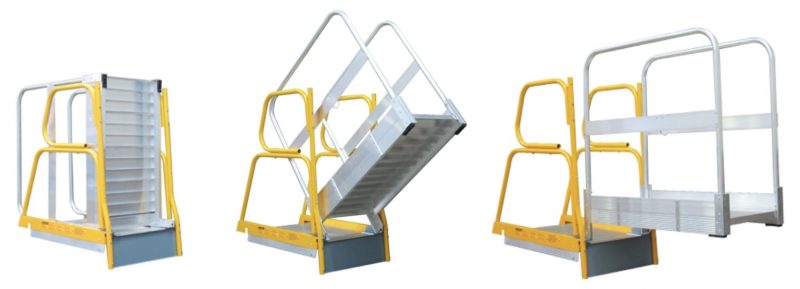
When the Navigator Pro configuration is fitted with safety gates, operators must ensure the gate is correctly closed and latched before use.
These procedures help support the safe use of Mobile Work Platforms across warehouse and industrial environments.
Consider the Overall Workplace Risk
Businesses should assess whether a mobile platform ladder is the appropriate access method for each task.
Factors such as floor conditions, nearby equipment, pedestrian traffic, overhead obstructions and the nature of the work can influence equipment selection.
Some applications may require alternative equipment, additional controls or a different working method.
The goal should always be to select access equipment that is appropriate for the specific job rather than assuming one product is suitable for every elevated task.
9. The StockMaster Navigator: A Practical Solution for Warehouse Access
For businesses looking to improve access to elevated storage locations, the StockMaster Navigator offers a combination of mobility, automatic braking and multiple platform-height options.
Its design addresses several common requirements associated with warehouse order picking and stock replenishment.
The single-control movement system makes repositioning easier, while the automatic return to the stationary position provides a controlled working arrangement.
Its modular construction also supports component replacement and ongoing maintenance.
The Navigator is particularly suited to businesses that:
-
Regularly access elevated warehouse shelving.
-
Perform repetitive stock-picking activities.
-
Replenish products in suitable retail storage areas.
-
Require access to different shelving heights.
-
Operate on smooth, level warehouse flooring.
-
Need Mobile Work Platforms for lightweight tasks.
For these applications, Mobile Work Platforms such as the Navigator can help businesses establish a more consistent approach to elevated access.
Its available platform heights also provide flexibility when selecting equipment for different storage layouts.
However, businesses should assess their specific requirements before choosing a model, particularly where working height, item weight and operating conditions differ. Mobile Work Platforms should always be selected to suit the intended task and workplace conditions.
10. Improving Workplace Efficiency Through the Right Access Equipment
Workplace efficiency is influenced by many factors, including storage layout, employee movement, equipment availability and the suitability of handling systems.
Access equipment is an important part of this process, particularly in facilities where elevated storage is used extensively.
Mobile Work Platforms can help simplify access activities by providing equipment that can be moved between suitable working locations.
For retail businesses, this can support stock replenishment and back-of-house organisation.
For distribution centres, Mobile Work Platforms can help employees access elevated shelving during inventory and order-picking activities.
For industrial facilities, suitable mobile access equipment can assist with selected inspections and general maintenance tasks.
The StockMaster Navigator brings these applications together through a purpose-designed warehouse platform ladder.
Its single-control system, automatic braking mechanism and range of platform heights provide practical features for businesses that need regular access to elevated areas.
Selecting the correct equipment and implementing appropriate operating procedures can help organisations maintain more organised and controlled workplace access practices using Mobile Work Platforms.
Conclusion: Choosing the Right Mobile Work Platforms for Your Workplace
Retail stores, distribution centres and industrial facilities all have different access requirements. However, they share a common need for equipment that allows employees to reach elevated areas safely and efficiently.
Mobile Work Platforms offer a practical approach to suitable elevated access by combining mobility with a dedicated working surface.
The StockMaster Navigator is designed for warehouse order picking, shelf stocking, inventory access and general maintenance tasks on appropriate smooth, level surfaces. Its single Move, Steer and Brake control allows convenient repositioning, while its automatic braking system returns all four feet to the stationary position when the control is released.
With multiple platform heights, a 150 kg load rating and modular construction, the Navigator provides a versatile access solution for businesses with recurring warehouse and storage access requirements. These Mobile Work Platforms can support a range of workplace access tasks when correctly selected for the application.
Choosing the correct configuration requires careful consideration of operating conditions, working height, item weight and the specific task being performed.
For businesses looking to improve elevated stock access and workplace operations, the StockMaster Navigator is worth considering as part of a suitable workplace access strategy using Mobile Work Platforms.
Contact Spacepac Industries to discuss the StockMaster Navigator and find the right mobile warehouse platform ladder for your operational requirements, including your Mobile Work Platforms needs.
Phone: 1300 763 444
Email: sales@spacepac.com.au
Website: https://www.spacepac.com.au/product/navigator-mobile-warehouse-platform-ladders