


Reducing Overreaching and Strain During High-Level Stock Picking
Warehouses, distribution centres and industrial storage facilities rely on efficient stock picking to maintain productivity and meet order fulfilment requirements. However, retrieving products from high shelves may require workers to reach above shoulder height, stretch across shelving or repeatedly adjust their posture, increasing the risk of fatigue and musculoskeletal strain.
Reducing Overreaching and Strain should be a priority when reviewing warehouse access procedures, shelving arrangements and manual handling practices. Suitable access equipment can help workers reach elevated storage areas while maintaining a more controlled working position.
Using unsuitable ladders, stretching from unstable positions or repeatedly climbing down to reposition equipment can introduce additional risks, particularly in busy warehouses with multiple aisles and storage levels.
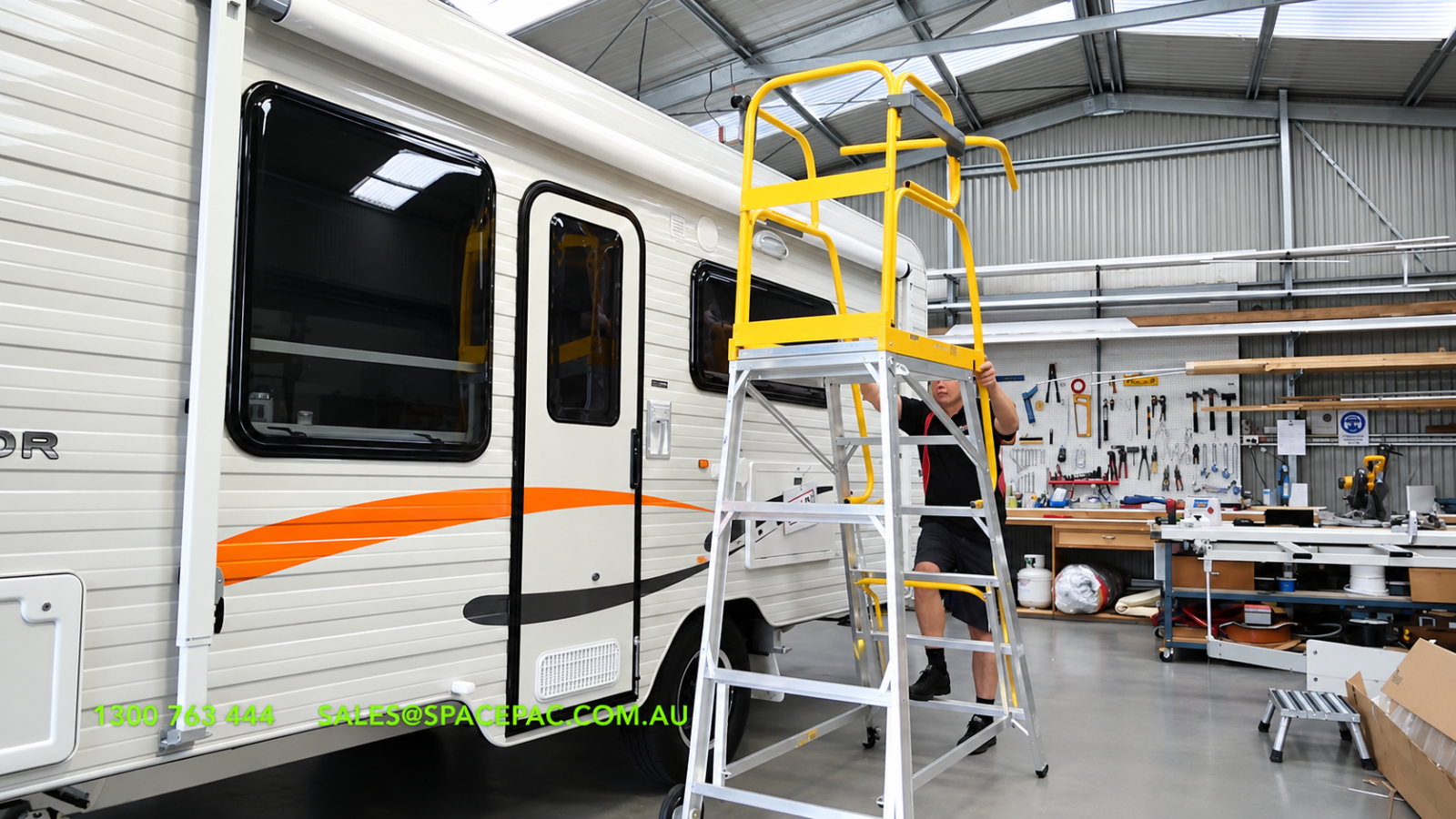
Effective Reducing Overreaching and Strain strategies combine safe work procedures, appropriate stock placement, ergonomic handling techniques and suitable access equipment. The StockMaster Tracker mobile all-terrain platform ladder is one option for workplaces requiring elevated access across suitable sealed and unsealed surfaces.
This article examines the causes of overreaching during high-level stock picking and practical approaches to Reducing Overreaching and Strain, including how the StockMaster Tracker can support safer warehouse access. Prioritising Reducing Overreaching and Strain can help businesses address avoidable physical demands and improve stock-picking practices.
Understanding the Risks of Overreaching During Stock Picking
Overreaching occurs when a worker extends their arms or body beyond a comfortable, controlled position to access an item. In warehouses, this often happens when products are stored above shoulder height, towards the back of shelves or beyond natural reach. Reducing Overreaching and Strain starts with identifying these risk factors.
Although individual movements may seem harmless, repetitive reaching can place cumulative demands on the shoulders, neck, back and upper limbs. Handling heavy, bulky or awkward products can increase these demands.
Common examples include:
- Stretching sideways to retrieve cartons from the far end of a shelf.
- Reaching overhead to remove products from upper storage levels.
- Leaning forward while using a ladder or elevated platform.
- Twisting the torso while lifting items from high shelves.
- Holding items away from the body while lowering them.
- Repeatedly reaching towards the same elevated location throughout a shift.
These tasks become more demanding when workers face time pressure or use access equipment that does not suit the required working height. Reducing Overreaching and Strain requires suitable equipment and safe working practices.
Reducing unnecessary reaching is an important ergonomic and workplace risk management measure. Effective Reducing Overreaching and Strain strategies consider stability, manual handling, access and repetitive movements. By addressing these factors, businesses can improve stock-picking practices and support Reducing Overreaching and Strain across warehouse operations.
How Repeated Reaching Can Contribute to Physical Strain
Musculoskeletal strain can develop when muscles, tendons and supporting tissues experience repeated or excessive physical demands. Reducing Overreaching and Strain involves considering movement frequency, force, posture, exposure duration and recovery time.
Shoulder and upper-arm strain
Repeated overhead reaching increases demands on the shoulder muscles. Retrieving stock from elevated shelves for extended periods can contribute to fatigue, particularly when workers stretch to secure a grip. Reducing Overreaching and Strain helps minimise unnecessary overhead movements.
Neck and upper-back discomfort
Looking upwards or leaning forward for prolonged periods can contribute to neck and upper-back discomfort. Suitable access equipment can support Reducing Overreaching and Strain by helping workers position themselves appropriately when inspecting labels or retrieving products.
Lower-back strain
Leaning forward, twisting or reaching sideways while handling stock can increase demands on the lower back. Reducing Overreaching and Strain requires avoiding awkward postures, keeping loads close to the body where practical and using suitable handling methods.
Fatigue from repetitive movements
High-volume picking may involve hundreds of retrievals per shift. Repeated climbing, stretching and repositioning can increase fatigue when equipment and workstations are unsuitable. Effective Reducing Overreaching and Strain strategies can help minimise unnecessary physical effort while supporting workplace safety and productivity.
Fatigue may also affect concentration and movement control, making appropriate equipment selection, task planning and safe work procedures important parts of warehouse risk management.
Common Causes of Overreaching in High-Level Stock Picking
Identifying the reasons workers overreach is an essential first step towards implementing effective controls.
Poorly organised shelving
When frequently picked items are stored at unsuitable heights, workers may need to reach overhead or bend repeatedly to access them. A storage arrangement that does not reflect product demand can increase unnecessary movement throughout the day.
Reviewing picking frequency, product dimensions and handling requirements can help businesses determine which items should be positioned in more accessible locations.
Incorrect access equipment
A step ladder that does not provide sufficient working height may encourage a worker to stretch rather than reposition the ladder. Similarly, equipment that is difficult to move across the operating surface may discourage workers from relocating it as often as required.
Selecting equipment according to the working height, floor conditions, available space and nature of the task helps address these issues.
Excessive manual handling
High-level picking can involve more than reaching. Workers may need to grip, lift, lower and transfer products while maintaining their balance. Heavy or bulky items can make these movements more demanding.
The weight and dimensions of products should therefore be assessed before deciding whether a mobile platform ladder is appropriate or whether mechanical lifting assistance is needed.
Repeated equipment repositioning
Picking stock from several locations may require workers to move access equipment frequently. Equipment that is awkward to manoeuvre can make the process less efficient and may create incentives to reach beyond a safe working position.
Mobile access equipment designed for the operating environment can make repositioning more practical, provided workers follow the manufacturer’s instructions and move the equipment only under permitted conditions.
Time pressure and inconsistent procedures
Productivity targets can influence how workers approach repetitive tasks. If safe repositioning takes longer than expected, workers may be tempted to stretch or lean to retrieve an item.
Clear procedures, suitable equipment and training help reinforce the expectation that workers must establish a safe working position before handling stock.
Practical Strategies for Reducing Overreaching and Strain
Effective prevention involves a combination of workplace design, safe work practices and appropriate equipment. No single product can eliminate every risk associated with elevated stock picking.
1. Position frequently picked stock at accessible heights
Review inventory data to identify fast-moving products and frequently accessed items. Where practical, position these products within an appropriate picking zone that minimises repeated overhead reaching and excessive bending.
Heavier items should generally be stored at heights that allow workers to handle them without lifting from an awkward position. Product weight, stability and handling requirements should guide storage decisions.
Less frequently accessed items may be stored higher, provided the workplace has suitable access equipment and procedures for retrieving them safely.
2. Match access equipment to the working height
Workers should not be expected to compensate for inadequate equipment by stretching, leaning or standing on unsuitable surfaces.
A suitable mobile platform ladder provides an elevated working position for tasks that fall within its intended application. The correct model depends on the height of the shelving, the space available, the operating surface and the load being handled.
Before selecting equipment, assess the maximum working height required and the available clearance around shelves, doorways and overhead structures.
3. Reposition equipment instead of stretching
If an item is outside comfortable reach, the worker should reposition the access equipment or use another approved method rather than leaning sideways or extending the body beyond a stable working position.
This is particularly important when picking from deep shelving or moving between adjacent storage bays.
A mobile platform that can be repositioned efficiently may help workers maintain a more suitable position throughout repetitive picking tasks.
4. Assess product weight and dimensions
A safe access solution must account for the item being handled, not just the height of the shelf.
Large cartons can obstruct a worker’s view, while heavy or awkward loads may require two-handed handling or mechanical assistance. Carrying an item while climbing can also compromise safe access.
Where a product cannot be handled comfortably and safely from the platform, consider a suitable lifting aid, alternative storage arrangement or a different picking method.
5. Train workers in safe picking procedures
Training should explain when access equipment is required, how to inspect it, how to position it and how to recognise unsafe reaching or handling practices.
Workers should understand the equipment’s operating limitations, including load ratings, surface requirements and movement procedures. They should also know when to stop a task and request assistance.
Refresher training and workplace observations can help identify unsafe practices before they become routine.
6. Keep aisles and working areas clear
Obstructions can make access equipment harder to manoeuvre and position. Pallets, packaging materials, discarded wrapping and other items should be managed so that access routes remain suitable for the equipment being used.
Workplaces should also account for turning space, changes in floor level, nearby vehicles and pedestrian traffic when planning stock-picking activities.
7. Review tasks and worker feedback
Workers who perform picking tasks regularly can identify locations where reaching is difficult, equipment is inconvenient or product placement creates unnecessary physical demands.
Regular risk assessments should consider repetitive movement, load handling, work pace, environmental conditions and the suitability of current access arrangements. Changes to shelving or picking procedures should be reviewed to confirm that they improve safety without creating new hazards.
Choosing a Mobile Platform Ladder for Elevated Stock Picking
Mobile platform ladders can provide an alternative to repeatedly climbing conventional step ladders or using unsuitable access methods. Their suitability depends on the specific task and the environment in which they will operate.
When evaluating equipment, consider the following factors:
- Working height: The platform must allow the worker to reach the intended picking location without stretching.
- Stability: The equipment must be suitable for the operating surface and used according to its instructions.
- Mobility: Workers should be able to reposition it using the approved movement procedure.
- Fall prevention: Appropriate platform rails, gates and access arrangements should be considered.
- Load capacity: The rated capacity must account for the worker and any permitted tools or materials.
- Operating space: Aisle width, shelf depth, overhead clearance and turning areas can affect equipment selection.
- Maintenance: Inspections and maintenance should follow the manufacturer’s recommendations and applicable workplace requirements.
A mobile platform ladder is not a substitute for a complete manual handling assessment. Where tasks involve heavy loads, sustained overhead handling or inaccessible storage positions, other controls may be necessary.
StockMaster Tracker: Supporting Safer Access to Elevated Stock
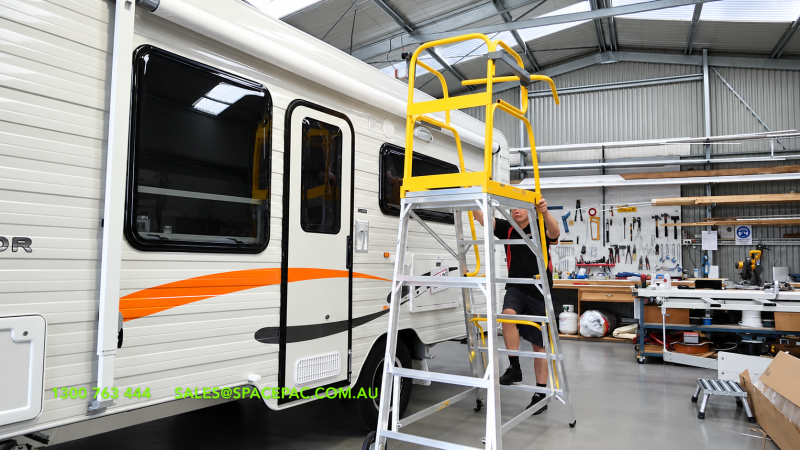
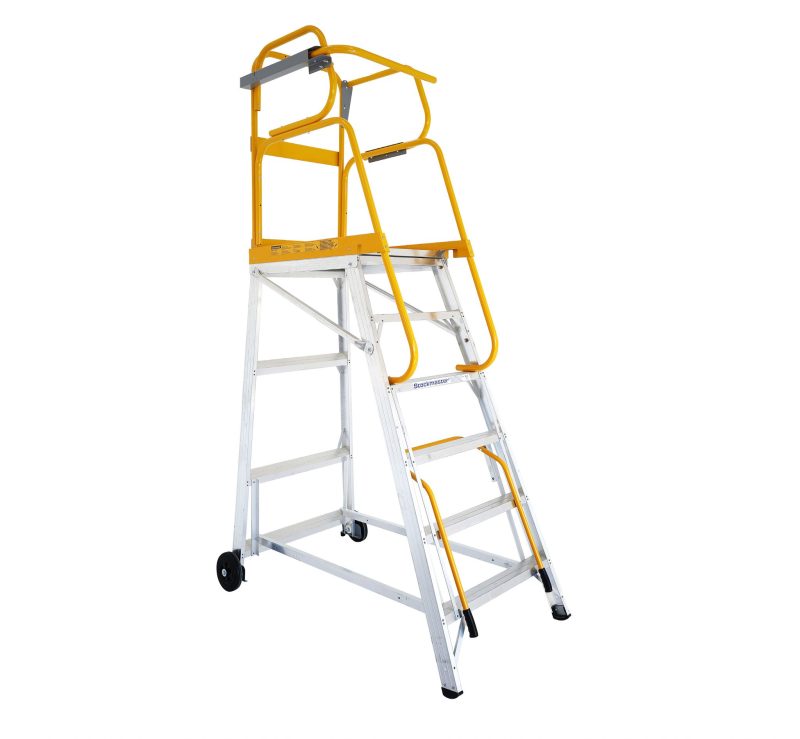
The StockMaster Tracker is a mobile all-terrain work platform ladder available from Spacepac. It is designed for suitable sealed and unsealed surfaces, supporting indoor and outdoor applications where operating requirements are met.
For businesses focused on Reducing Overreaching and Strain during high-level stock picking, the Tracker provides a practical access option for reaching elevated storage locations across different work areas.
Its features support access and repositioning, helping workplaces address challenges associated with repetitive picking tasks and Reducing Overreaching and Strain.
Mobile design for changing work locations
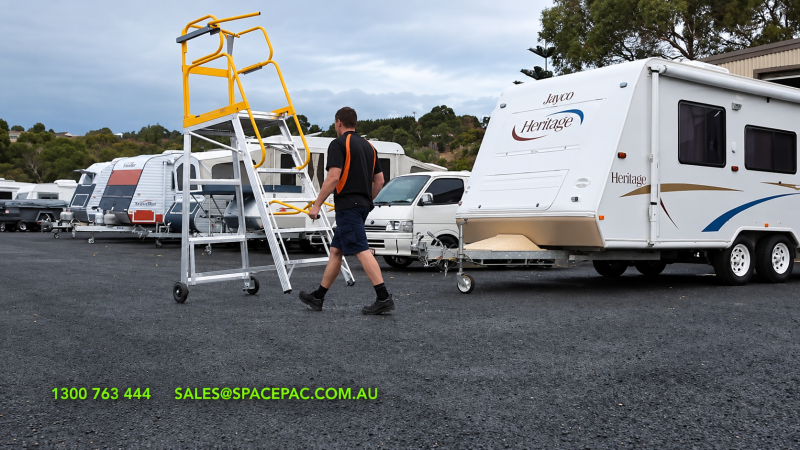
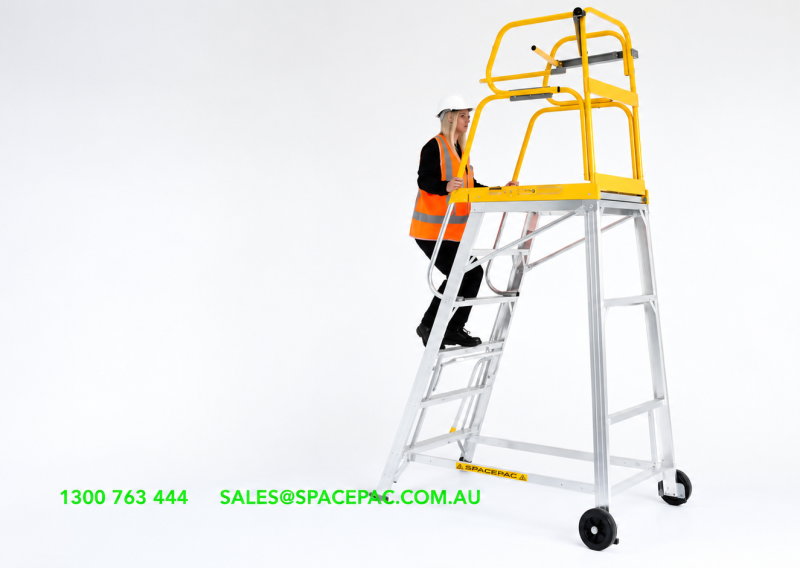
Stock picking often involves moving between shelving bays, storage zones and work areas. The Tracker uses two large-diameter wheels to facilitate movement over suitable sealed or unsealed surfaces and slopes.
This mobility can help workers reposition equipment between tasks, supporting Reducing Overreaching and Strain by making appropriate access more practical. Workers must assess routes and operating conditions before moving the equipment and follow the manufacturer’s instructions.
Single-control steering and braking
The Tracker uses a single control for steering and braking. When released, the control allows the platform to return automatically to its stationary, braked mode.
This design supports controlled repositioning and helps keep the equipment stationary when correctly positioned. Confirm the required stationary mode before climbing or beginning work to support Reducing Overreaching and Strain during elevated picking tasks.
Tracker Pro safety features
The Tracker Pro configuration includes a safety railing system and an automatic closing gate at the platform entry. The optional Rota-Gate provides side access, which may be useful for stock picking and inspection tasks.
These features help support safer access and reduce exposure to accidental step-off hazards when the equipment is correctly selected and used. Confirm the precise configuration before purchase, as features vary by model.
Range of platform heights
The Tracker is available in multiple sizes, allowing businesses to match platform height and working range to their storage layout.
The published selection chart lists platform heights from 860 mm to 4,015 mm across the range. Working ranges depend on the selected model, and these figures should be treated as selection guides rather than a substitute for an application assessment.
Choosing the correct size is essential for Reducing Overreaching and Strain. A platform that is too low may still encourage workers to stretch, while an unsuitable model may not fit the aisle or operating area.
Designed for industrial use
The Tracker has a modular design that allows components to be replaced following accidental damage. It is designed and tested to a 150 kg load rating.
Spacepac states that the product meets or exceeds the requirements of AS/NZS 1892.1:1996 and EN 131 Parts 1 and 2. Businesses should verify the current applicable standards and workplace requirements as part of their equipment assessment.
For full product specifications and selection guidance, visit the StockMaster Tracker mobile all-terrain platform ladder.
How StockMaster Tracker Can Fit Into a Stock-Picking Workflow
The Tracker should be considered as part of a planned access procedure rather than a stand-alone solution to ergonomic risks.
A typical workflow may include the following steps:
Step 1: Identify the picking location. Confirm the shelf height, item dimensions, product weight and available working space.
Step 2: Select appropriate equipment. Check that the chosen Tracker model provides a suitable working range and is appropriate for the operating surface and task.
Step 3: Inspect the work area. Check for obstructions, floor defects, slopes, overhead hazards and other conditions that may affect safe movement or positioning.
Step 4: Position the platform correctly. Move the equipment using the manufacturer’s approved procedure. Confirm that it has returned to its stationary, braked mode before use.
Step 5: Maintain a controlled working position. Avoid leaning beyond the platform’s safe working area. Reposition the equipment when necessary rather than stretching to reach another location.
Step 6: Handle products appropriately. Keep loads within permitted limits and use mechanical assistance or another approved method when items are too heavy, bulky or awkward to handle safely.
Step 7: Review the task. If the same location repeatedly requires awkward reaching, reassess the shelving layout, equipment selection or picking method.
This process reinforces the role of equipment selection, training and task planning in reducing unnecessary physical demands.
Additional Considerations for Warehouse Managers
Warehouse managers should prioritise Reducing Overreaching and Strain as part of a broader safety and productivity programme.
Start by identifying shelves and products that require frequent overhead access. Observe how workers retrieve and lower stock, considering reaching distance, twisting, load weight and equipment repositioning.
To support Reducing Overreaching and Strain, assess whether existing access equipment suits the floor surface and available space. Mobile platform ladders may suit some environments, while narrow aisles or confined areas may require alternative solutions.
Managers should also review stock replenishment. Relocating heavy products or introducing mechanical handling equipment may improve Reducing Overreaching and Strain more effectively than changing access equipment alone.
Finally, establish a process for reporting damaged equipment, unsafe shelving and tasks involving awkward postures. These reports support ongoing Reducing Overreaching and Strain through improved risk assessments, training and equipment selection.
Conclusion: Building a Safer Approach to High-Level Stock Picking
Reducing Overreaching and Strain requires more than asking workers to change how they move. Businesses should assess shelf placement, product handling requirements, working heights, access equipment and picking conditions.
Practical measures for Reducing Overreaching and Strain include placing frequently picked stock at accessible heights, repositioning equipment instead of stretching, providing manual handling training and reviewing repetitive tasks.
The StockMaster Tracker mobile all-terrain platform ladder supports Reducing Overreaching and Strain by providing elevated access across suitable indoor and outdoor surfaces. Its mobility, single-control steering and braking system, Tracker Pro safety features and range of platform heights support safer access when matched to the application.
Effective Reducing Overreaching and Strain also requires assessing the task, as heavy or awkward products may need mechanical lifting assistance.
For advice on selecting suitable StockMaster access equipment for your warehouse or industrial facility, contact Spacepac on 1300 763 444 or email sales@spacepac.com.au.
To discover more about the StockMaster Tracker, visit the product page or contact Spacepac to discuss your access requirements.