


How Folding Equipment Carts Improve Manual Handling for Service Technicians
Service technicians regularly work with equipment that is difficult to lift, move and position. Coffee machines, photocopiers, commercial appliances, IT equipment and other service items can be heavy, bulky or awkwardly shaped. Moving this equipment between a vehicle, workshop, office, shop or customer site can create manual handling challenges, particularly when technicians are working alone.
A suitable equipment cart can significantly simplify these tasks. Rather than relying on lifting, carrying or repeatedly repositioning heavy equipment by hand, technicians can use a purpose-designed platform cart to support the load throughout the movement process.
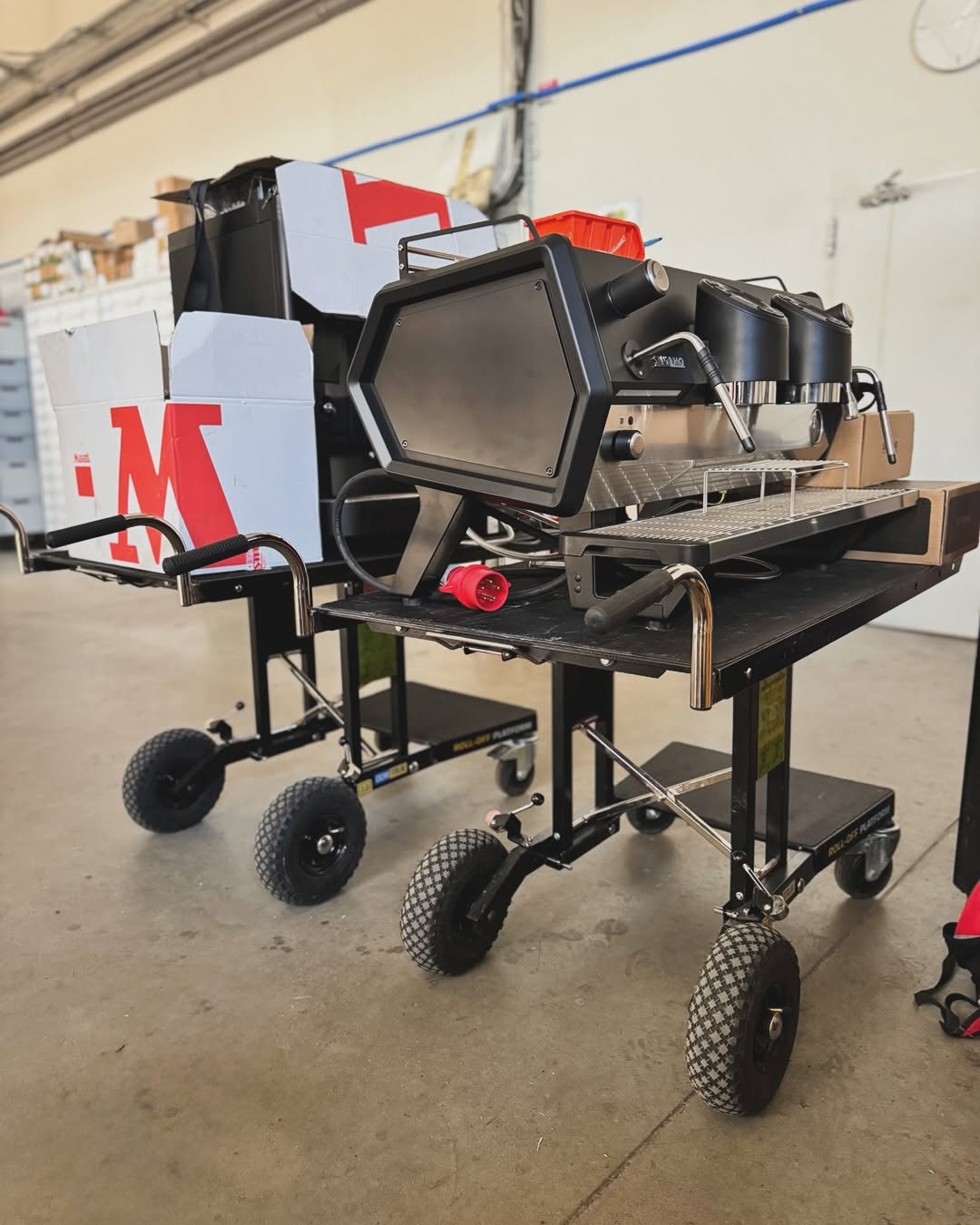
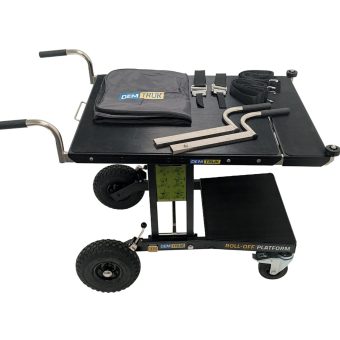
The Demtruk Delux 2.0 is designed for exactly this type of application. With a maximum load capacity of 220 kg, adjustable load height, large pneumatic rear wheels, a braked front castor and folding construction, it provides a practical solution for transporting heavy and awkward equipment during service work.
For technicians, the benefit is not simply having another trolley. The real advantage is reducing unnecessary manual handling while making the movement of equipment more controlled, efficient and manageable.
Why Manual Handling Is a Challenge for Service Technicians
Manual handling is an unavoidable part of many service and maintenance jobs. A technician may need to collect equipment from a warehouse, load it into a service vehicle, transport it to a customer location and then move it into the final installation or service area.
The challenge is that the equipment being moved is not always designed to be easily handled.
A commercial coffee machine, for example, may have considerable weight concentrated in a relatively compact body. A large photocopier can be both heavy and difficult to grip. Other equipment may have smooth surfaces, uneven weight distribution or dimensions that make conventional lifting techniques impractical.
The situation becomes more difficult when:
- The equipment must be moved from a vehicle to ground level.
- The technician needs to negotiate doorways or narrow access areas.
- The load must be moved across uneven surfaces.
- The equipment needs to be positioned at a specific working height.
- The technician is working alone.
- The load needs to be moved repeatedly during a service or demonstration.
- The equipment cannot be safely carried using conventional lifting methods.
In these circumstances, the objective should be to minimise unnecessary lifting and carrying wherever practical.
A folding equipment cart provides an alternative approach by supporting the load while it is being transported.
How the Demtruk Delux 2.0 Supports Safer Equipment Movement
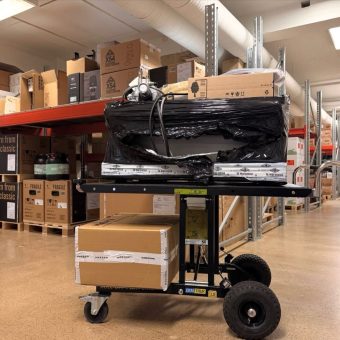
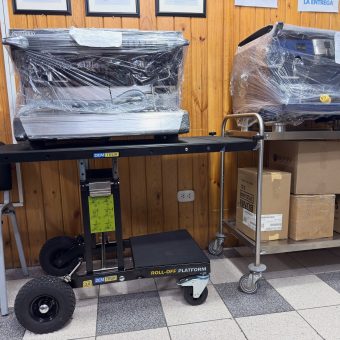
The Demtruk Delux 2.0 is a folding cart designed for moving heavy and awkward equipment such as coffee machines and large photocopiers into and out of vehicles and into offices or shops.
Its 220 kg maximum load capacity provides substantial capacity for service equipment, while its platform configuration allows the load to remain supported during movement.
This changes the manual handling task from one primarily based on lifting and carrying to one based on controlled movement.
That distinction is important.
Instead of asking a technician to physically carry a heavy piece of equipment over a distance, the cart can take much of the load while the technician controls the direction and movement of the unit.
The result can be a more practical workflow:
Load → Secure → Move → Position → Unload
Rather than:
Lift → Carry → Balance → Reposition → Lower
This approach can help reduce unnecessary physical effort while also improving the efficiency of service operations.
1. Reducing Lifting and Carrying
One of the primary benefits of the Demtruk Delux 2.0 is that it can help reduce the amount of manual lifting required when transporting service equipment.
The cart has a maximum load capacity of 220 kg, making it suitable for many items that would be difficult or impractical for a single person to carry.
For a service technician, this is particularly useful when equipment needs to travel between a vehicle and the customer’s premises.
Rather than lifting an item and carrying it across a parking area, loading dock or shop floor, the equipment can be placed onto the cart and moved using the cart’s wheels.
This does not eliminate all manual handling. Technicians still need to assess the load, secure it appropriately and use safe handling procedures. However, using equipment designed to support the load can reduce the need for prolonged carrying and awkward lifting.
2. Height Adjustment Helps With Positioning
Another important feature of the Demtruk Delux 2.0 is its adjustable load height.
The base can be raised in 50 mm increments from approximately 700 mm to 940 mm from the ground.
This allows the cart to be adjusted to suit different loading and unloading situations.
For example, the technician may need to transfer equipment from a vehicle or position it at a convenient working height. Instead of working with a fixed platform height, the adjustable system provides greater flexibility.
Height adjustment can also help reduce unnecessary bending when handling equipment.
When technicians repeatedly move heavy objects, awkward posture can become an important consideration. Working with a platform that is closer to the appropriate loading height can make the overall process more manageable.
The ability to adjust the height is therefore not simply a convenience feature. It can contribute to a more practical manual handling workflow.
3. Better Manoeuvrability in Service Environments
Service technicians rarely work in completely open spaces.
They may need to move equipment through:
- Office corridors
- Retail stores
- Hospitality venues
- Workshops
- Warehouses
- Loading areas
- Doorways
- Customer premises
- Vehicle access areas
The Demtruk Delux 2.0 is designed with manoeuvrability in mind.
The front of the base incorporates a 125 mm swivel braked castor, while the rear uses axle-mounted pneumatic braked wheels measuring 260 x 85 mm.
The larger pneumatic rear wheels are particularly useful where the cart needs to travel across surfaces that are less forgiving than a smooth warehouse floor.
The combination of wheel configuration, steering control and braking provides technicians with a cart that can be moved and positioned rather than simply pushed in a straight line.
This can be especially valuable when working in environments where precise positioning is required.
4. Positive Braking for Greater Control
A heavy load becomes more difficult to control once it begins moving.
Braking is therefore an important consideration when selecting equipment for manual handling applications.
The Demtruk Delux 2.0 has a braked front swivel castor and pneumatic rear wheels with braking capability. This provides positive control when the cart needs to remain stationary.
For service technicians, braking can be particularly useful during loading, unloading and positioning.
For example, when equipment is being transferred onto the platform, the cart needs to remain stable rather than rolling away. Similarly, when a technician reaches the customer’s desired location, the cart can be secured before the load is removed.
Good equipment design should support the technician’s ability to control the load throughout the movement process, rather than only making transportation easier.
5. Single-Person Operation Can Improve Efficiency
Service businesses often need to balance workplace safety with operational efficiency.
If a heavy piece of equipment normally requires two people to move, every service call can potentially involve additional labour, coordination and scheduling.
The Demtruk Delux 2.0 is designed to support single-person operation for appropriate loads and conditions.
This can provide an important operational advantage for technicians who frequently travel between customer sites.
A technician equipped with a suitable transport cart may be able to complete movement tasks without waiting for another employee to assist with every transfer.
This can help reduce:
- Duplicate staffing requirements
- Waiting time
- Manual carrying
- Unnecessary handling stages
- Vehicle-to-site transfer time
There are still situations where two people may be required. The cart includes four pallet carry handles for situations where two-person carrying of the pallet component is necessary.
The objective is not to replace safe teamwork when it is required. Instead, the equipment provides more options for handling the load.
6. Folding Construction Makes Vehicle Transport Easier
A service technician’s vehicle is effectively a mobile workplace.
Every piece of equipment needs to justify the space it occupies.
A large trolley that is useful at the customer’s premises but difficult to transport between jobs can create another logistical problem. This is where the folding design of the Demtruk Delux 2.0 becomes particularly useful.
The foldable base has a unit size of approximately 310 x 988 x 384 mm and weighs 18.3 kg.
When packed, the base has a pack size of approximately 1055 x 345 x 408 mm.
This folding configuration allows the equipment cart to be transported and stored more efficiently when it is not in use.
For mobile technicians, this is a significant consideration.
A folding cart can remain part of the service vehicle’s equipment without occupying the same footprint as a permanently assembled platform trolley.
7. Two Platform Sizes for Different Equipment
Service equipment is not always the same size.
A compact appliance may only require a smaller platform, while a large photocopier or commercial machine may need additional platform length.
The Demtruk Delux 2.0 is available with two platform options.
Standard Top
The standard top is part number KE470/00 and measures 850 mm long by 660 mm wide, with a 150 mm extension.
The platform itself weighs approximately 15 kg.
Large Top
The large top is part number KE471/00 and measures 1200 mm long by 660 mm wide, also incorporating a 150 mm extension.
The large platform weighs approximately 21 kg.
Having two platform lengths allows businesses to select a configuration that better matches the equipment they commonly transport.
The 660 mm platform width also provides useful support for larger equipment while the extended platform section provides additional working surface.
8. Load Restraint Helps Keep Equipment Secure
Heavy equipment can shift during movement if it is not properly restrained.
The Demtruk Delux 2.0 includes two load straps as part of the supplied equipment.
These straps can be used to help secure appropriate loads to the platform during transportation.
This is particularly relevant when moving equipment that is tall, bulky or has a higher centre of gravity.
Load restraint should always be selected and applied according to the characteristics of the specific item being transported. The cart itself does not remove the need for technicians to assess the load and ensure it is stable before movement.
However, having integrated restraint equipment available makes it easier to incorporate load security into the workflow.
9. Stair-Climbing Handles Add Practical Flexibility
Moving equipment around a customer site can involve more than simply travelling across a level floor.
The Demtruk Delux 2.0 includes two front “Stair Climb Handles” along with removable rear handles.
The additional handles provide technicians with more options when positioning or manoeuvring the cart.
The handles can also be removed at the touch of a button on the sides, which helps with handling and storage.
This combination of removable and additional handles reflects the realities of mobile service work: equipment needs to adapt to the environment rather than forcing the technician to work around a rigid trolley design.
10. A Lower Shelf Provides Additional Carrying Capacity
Service technicians often need more than just the primary piece of equipment.
Tools, accessories, cables, parts and other service items may need to travel with the main load.
The Demtruk Delux 2.0 includes a lower shelf, providing an additional location for carrying suitable items.
This can help technicians consolidate equipment into a single mobile handling system.
Instead of moving the primary machine separately from smaller service equipment, appropriate items can be transported together, helping create a more organised workflow.
For technicians who make repeated service calls, small efficiency improvements like this can become significant over time.
Common Applications for Folding Equipment Carts
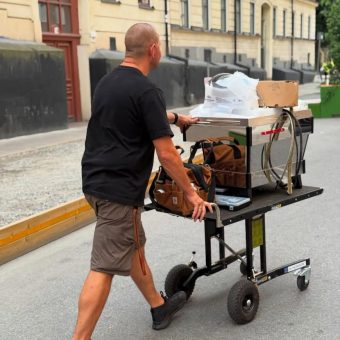
The Demtruk Delux 2.0 is particularly suited to industries and applications where technicians regularly move heavy equipment.
Coffee Machine Service
Commercial coffee machines can be heavy and difficult to grip securely.
A folding equipment cart can help technicians move these machines from service vehicles into cafes, restaurants, hotels and other hospitality environments.
The platform provides continuous support while the technician controls the movement.
Photocopier and Office Equipment Service
Large photocopiers can present a significant manual handling challenge because of their size and weight.
The Demtruk Delux 2.0 is designed to assist with moving large photocopiers into offices and other commercial premises for service, installation or demonstration purposes.
The larger 1200 mm platform option can provide additional support for longer equipment.
Courier and Delivery Applications
Couriers may also encounter loads that are too heavy or awkward for convenient manual carrying.
A folding cart that can be stored in a delivery vehicle and deployed when required can provide greater flexibility at the point of delivery.
Appliance and Equipment Demonstrations
Service technicians and equipment representatives may need to transport machines into retail stores, offices or customer facilities for demonstrations.
The ability to move the equipment efficiently from the vehicle to the demonstration area can reduce unnecessary handling steps.
Folding Equipment Carts and the Service Technician Workflow
The biggest benefit of a folding equipment cart is often seen when considering the complete workflow rather than one individual feature.
A technician can potentially use the Demtruk Delux 2.0 through several stages of a service job:
Stage 1: Prepare
The folded cart is transported in the service vehicle.
Stage 2: Deploy
The cart is unfolded and configured for the required application.
Stage 3: Load
The equipment is positioned onto the platform using appropriate manual handling techniques.
Stage 4: Secure
Load straps and other suitable controls are used to stabilise the equipment.
Stage 5: Adjust
The platform height can be adjusted in 50 mm increments to suit the application.
Stage 6: Move
The technician manoeuvres the cart through the required route.
Stage 7: Position
The brakes can be applied when the equipment reaches the required location.
Stage 8: Unload
The equipment is transferred into its final position using appropriate handling procedures.
This workflow illustrates why the value of an equipment cart goes beyond simply providing wheels.
It creates a handling system around the load.
Improving Manual Handling Without Complicating the Job
Good manual handling equipment should make a technician’s job easier without adding unnecessary complexity.
The Demtruk Delux 2.0 combines several practical features into one system:
- 220 kg maximum load capacity
- Folding base
- Adjustable load height
- 125 mm swivel braked front castor
- 260 x 85 mm pneumatic rear wheels
- Two platform length options
- 660 mm platform width
- 150 mm platform extension
- Load straps
- Removable handles
- Stair-climb handles
- Lower shelf
- Carry bag
- Two-person pallet carry handles
The significance of these features is how they work together.
A service technician does not need a cart simply because it has a high load rating. They need equipment that can be transported, deployed, loaded, secured, manoeuvred and stored efficiently.
That is where a purpose-designed folding cart can provide greater value than a conventional trolley.
Choosing the Right Platform Configuration
When selecting a Demtruk Delux 2.0, businesses should consider the equipment their technicians most frequently move.
The 850 mm standard platform can be appropriate for more compact equipment, while the 1200 mm large platform provides additional length for larger loads.
The platform width is 660 mm for both options, and both include a 150 mm extension.
The correct configuration should be determined by considering:
- Equipment dimensions
- Equipment weight
- Centre of gravity
- Loading method
- Available vehicle space
- Doorway and access restrictions
- Frequency of use
- Whether one or two people are required
- The surfaces over which the equipment will be transported
A load should always remain within the cart’s rated capacity and be properly positioned and restrained.
Why This Matters for Workplace Safety
Manual handling injuries can have consequences for both employees and businesses.
For technicians, an injury can affect their ability to work and perform routine service activities. For businesses, injuries can contribute to lost productivity, disruption, workers’ compensation costs and additional staffing requirements.
Using mechanical handling aids such as the Demtruk Delux 2.0 where appropriate is one way businesses can approach manual handling risks more systematically.
The Demtruk Delux 2.0 does not automatically make every handling task safe. Workers still need appropriate training, risk assessment and procedures. Loads need to be assessed individually, and technicians need to consider factors such as weight, stability, access, surface conditions and the route of travel.
However, where heavy or awkward equipment needs to be moved regularly, the Demtruk Delux 2.0 can form an important part of the overall manual handling control strategy.
Conclusion
For service technicians, manual handling is often part of the job, but unnecessary lifting and carrying do not have to be.
Heavy coffee machines, photocopiers, appliances and other service equipment can create challenges when they need to be transferred between vehicles and customer premises. A purpose-designed folding equipment cart provides a practical way to support these loads while improving manoeuvrability and operational efficiency.
The Demtruk Delux 2.0 combines a 220 kg load capacity with a folding base, adjustable height, braked wheels, pneumatic rear wheels, removable handles, load straps, a lower shelf and two platform length options.
The Demtruk Delux 2.0 folding construction makes it particularly relevant to mobile service operations, where equipment must be transported in a vehicle and deployed at different customer locations.
Most importantly, the Demtruk Delux 2.0 changes the way technicians approach equipment movement. Instead of relying primarily on lifting and carrying, technicians can use a supported, wheeled platform to move heavy and awkward equipment in a more controlled manner.
For couriers, equipment service companies, appliance technicians, office equipment specialists and other mobile service professionals, the Demtruk Delux 2.0 can contribute to a more efficient and practical manual handling process.
To learn more about the Demtruk Delux 2.0 Folding Cart, including its platform options and specifications, visit the Demtruk Delux 2.0 product page.