


StockMaster vs Imported Budget Platforms: Safety, Stability & Long-Term Value
When businesses select mobile warehouse platform ladders, the initial purchase price is often an important consideration. However, for workplaces where employees regularly access elevated shelving, stock, equipment and storage areas, the cheapest option does not necessarily provide the best long-term value.
A warehouse platform ladder is more than basic access equipment. Its stability, mobility, safety features, durability, compliance and ease of use can directly affect workplace safety, productivity and the total cost of ownership.
This is why the comparison between StockMaster vs Imported Budget Platforms should go beyond upfront pricing. Businesses should consider how the equipment performs in daily operations, how easily it can be repositioned, how stable it remains during use, whether replacement parts are available and whether the product is designed for long-term commercial use.
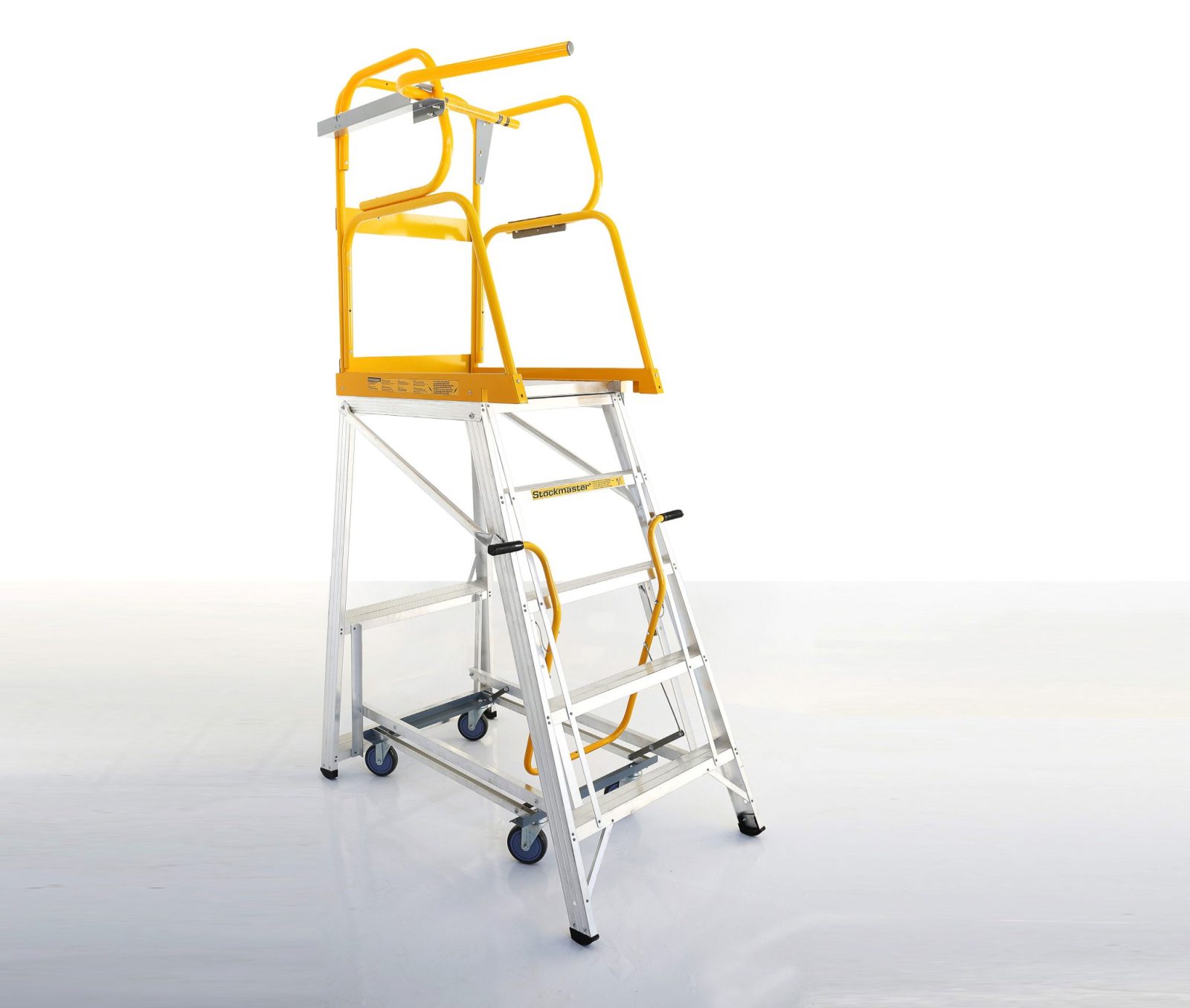
StockMaster platform ladders are designed around these practical requirements. The StockMaster Navigator Mobile Warehouse Platform Ladder combines controlled mobility with a stable working position through its single-control braking and steering system. The system keeps all four feet firmly on the ground when stationary while allowing the operator to move and steer the ladder efficiently when required.
For Australian warehouses and industrial workplaces, StockMaster platform ladders provide a purpose-designed approach to elevated access, combining stability, manoeuvrability and long-term durability rather than focusing solely on the initial purchase price.
Why Look Beyond the Purchase Price?
A lower-cost imported platform ladder may appear to offer immediate savings, but purchase price is only one part of the overall cost.
Businesses should also consider:
- Workplace safety and platform stability
- Ease and frequency of repositioning
- Quality and durability of construction
- Availability of replacement components
- Maintenance requirements
- Load rating and working height
- Compliance with relevant standards
- Expected service life
- Productivity during repetitive warehouse tasks
- Cost of replacement if the equipment becomes damaged or unsuitable
These factors contribute to the total cost of ownership.
For a warehouse using access equipment every day, even small differences in manoeuvrability or stability can become significant over months and years. Equipment that is difficult to move may slow down stock-picking operations, while equipment that does not provide adequate stability can create unnecessary workplace risks.
The objective should therefore be to select equipment that provides an appropriate balance of safety, performance, durability and long-term value.
StockMaster Navigator: Designed for Stability and Mobility
The StockMaster Navigator is designed to address one of the key challenges of mobile warehouse access equipment: providing a platform that is easy to move but stable when an operator is working from it.
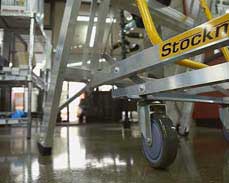
Navigator uses a single control for braking and steering. When the operator takes hold of the control, the ladder is raised into its mobile position, allowing it to be steered and repositioned.
When the operator releases the control, Navigator automatically returns to its stationary mode. The four feet remain firmly on the ground, providing a stable platform for the work task.
This eliminates the skating and instability associated with some warehouse ladders that use springs or foot pedals.
The operating sequence is simple:
Take hold of the control → move the ladder → release the control → return to stationary mode.
The result is a straightforward system that allows the operator to control both mobility and braking through one mechanism.
For businesses assessing StockMaster platform ladders against lower-cost alternatives, this design approach is an important consideration because mobility and stability are both essential functions of a warehouse access platform.
Easier Movement Around the Warehouse
Warehouse employees may need to access multiple shelving locations during a single shift. If a platform ladder is difficult to reposition, valuable time can be lost moving equipment between picking locations.
Navigator is designed to make repositioning easier.
When moving the ladder, the operator is positioned away from the front of the platform. This allows a more natural walking step and provides positive steering while the unit is in mobile mode.
StockMaster states that Navigator can move to a new position in less than half the time of competing products. For repetitive picking and shelf-stocking applications, faster repositioning can contribute to greater operational efficiency.
The single control can also allow Navigator to be used as a trolley, although this is not recommended for larger sizes.
This combination of manoeuvrability and controlled braking makes Navigator suitable for environments where workers need to move frequently between storage locations.
Warehouse Platform Ladder Safety
Safety should be one of the first considerations when comparing StockMaster platform ladders with imported budget platforms.
The Navigator is designed and tested to a 150 kg load rating and provides a stable platform for suitable warehouse access applications.
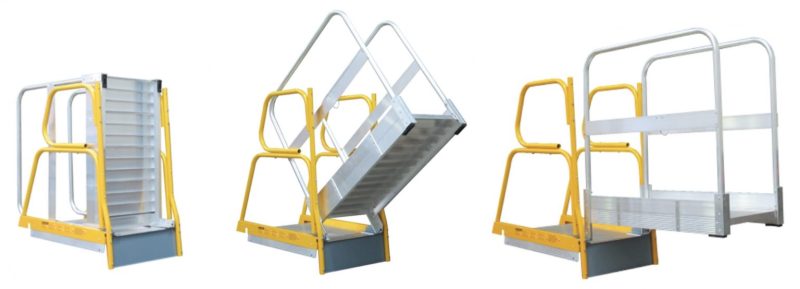
For additional protection, the Navigator Pro configuration includes a safety rail system and automatic gate features.
The StockMaster Auto-Gate automatically closes at the platform entry, helping protect the operator from accidentally stepping off the front of the platform.
Because the gate is designed to operate automatically, the operator’s hands remain available to carry a suitable item while maintaining a safe grip when entering or leaving the workspace.
Navigator Pro also includes the StockMaster Rota-Gate, which provides a gateway at the side of the platform. This can make access easier for stock-picking, inspection and other repetitive warehouse tasks.
The safety rail system can also be adjusted to suit the application.
These features demonstrate why a warehouse platform should be assessed as a complete access solution rather than simply compared according to price.
Compliance with Australian and International Standards
Compliance is another important consideration when comparing StockMaster vs Imported Budget Platforms.
StockMaster Navigator meets or exceeds the requirements stated for:
- AS/NZS 1892.1:1996 – Australian/New Zealand Standard
- ANSI-ASC A14.2-2007 – US Standard
- EN 131 Parts 1 and 2 – European Standard
For Australian businesses, considering relevant standards is an important part of selecting workplace access equipment.
However, compliance alone does not determine whether a particular platform is suitable for every application. Businesses should also assess the operating environment, surface condition, available space, working height, load and type of task before selecting equipment.
Built for Long-Term Commercial Use
Durability is another area where the difference between a commercial-grade platform and a budget alternative can become apparent over time.
StockMaster Navigator features a modular design, allowing parts to be replaced in the event of accidental damage. This can help extend the useful life of the equipment and reduce the need to replace the entire platform when an individual component requires attention.
The Navigator is manufactured from high-quality materials and is designed for long-term service.
With reasonable care, a StockMaster Navigator warehouse ladder can provide many years of service.
This is particularly relevant for warehouses, distribution centres and industrial facilities where access equipment may be used repeatedly throughout the working day.
Rather than evaluating equipment solely on the initial purchase price, businesses can consider the potential cost of ownership over the product’s service life.
Choosing the Right Platform for the Application
Selecting the correct StockMaster platform ladders model requires consideration of the operating environment and application.
Navigator requires a smooth and level operating surface. In mobile mode, the feet clear the operating surface by approximately 20 mm.
A typical concrete slab floor can provide a suitable operating surface. However, areas around sumps, drains or other changes in level exceeding approximately 20 mm may prevent correct operation.
The operating area should therefore be assessed before selecting Navigator.
Businesses should also consider:
- Doorway heights
- Overhead structures
- Turning space at storage bays
- Aisle widths
- Clearance around machinery and fixtures
- Available operating space
- Floor condition
- Required working height
- Weight and size of items being handled
For confined warehouse environments, Navigator’s manoeuvrability can make it particularly suitable for moving between service aisles and picking aisles.
StockMaster Navigator Size Selection
Navigator is available in a range of sizes to suit different working heights.
| Model | Platform Height | Working Range Up to 5 kg | Working Range Up to 20 kg |
|---|---|---|---|
| SM-N04 | 1,145 mm | 1.4–2.8 m | 1.4–2.3 m |
| SM-N05 | 1,435 mm | 1.7–3.1 m | 1.7–2.6 m |
| SM-N06 | 1,720 mm | 2.0–3.4 m | — |
| SM-N07 | 2,005 mm | 2.0–3.4 m | — |
| SM-N08 | 2,295 mm | 2.3–3.7 m | — |
| SM-N09 | 2,580 mm | 2.8–4.2 m | — |
| SM-N10 | 2,865 mm | 3.1–4.5 m | — |
| SM-N11 | 3,155 mm | 3.4–4.8 m | — |
| SM-N12 | 3,440 mm | 3.7–5.1 m | — |
| SM-N13 | 3,735 mm | 4.0–5.4 m | — |
| SM-N14 | 4,015 mm | 4.3–5.7 m | — |
The selection chart should be treated as a guide to maximum reach. The correct model also depends on the operating environment and application.
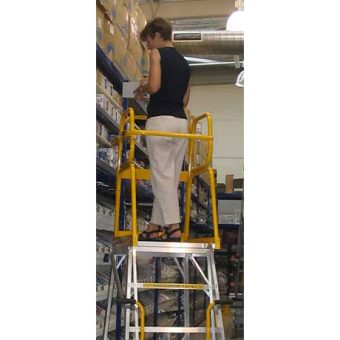
For picking and shelf-stocking applications, items being handled should generally be lightweight, with a maximum of 5 kg and suitable for carrying in one hand.
For larger or heavier items, an alternative solution such as the StockMaster Lift-Truk may be more appropriate.
At greater working heights, manually handling large or heavy items can create additional risk. The appropriate lifting aid should be considered where required.
Applications Across Australian Industries
The versatility of StockMaster platform ladders makes them suitable for various commercial and industrial environments where employees need controlled access to elevated storage or work areas.
Warehousing and Distribution
Warehouses and distribution centres can use Navigator for shelf picking, stock replenishment and accessing elevated storage locations.
Its manoeuvrability can be particularly useful where workers regularly move between picking aisles.
Retail Distribution
Large retail distribution centres often have extensive shelving systems and require frequent stock movement. Navigator can provide mobile access for suitable lightweight picking and replenishment tasks.
Manufacturing
Manufacturing facilities can use platform ladders for accessing components, inventory, elevated storage and suitable inspection areas.
Automotive Parts Warehouses
Automotive parts distributors often store products across multiple levels of shelving. A manoeuvrable platform can help workers access elevated stock while moving efficiently between locations.
Electrical and Industrial Supply
Electrical wholesalers and industrial supply businesses can use mobile platform ladders for accessing components, fittings and other products stored above ground level.
Facilities Management
For suitable maintenance and inspection applications, Navigator can be useful in confined areas with smooth, level floors. Depending on the surface and application, another StockMaster model such as Tracker may be more appropriate.
Commercial Storage
Storage facilities can use mobile access equipment where employees need to access elevated shelving while working within defined aisles and storage areas.
StockMaster vs Imported Budget Platforms: What Should Businesses Compare?
When evaluating StockMaster vs Imported Budget Platforms, businesses should consider the complete operational picture.
A useful comparison should include:
Stability: Does the platform remain firmly positioned when an operator is working?
Mobility: Can employees reposition the equipment quickly and easily?
Braking: Does the platform automatically return to a stable stationary position?
Safety: Does the design provide appropriate railings, gates and platform protection?
Compliance: Does the equipment meet applicable standards?
Durability: Is it designed for repeated commercial use?
Maintenance: Can damaged components be replaced rather than requiring complete equipment replacement?
Application suitability: Is the platform appropriate for the floor surface, working height, load and available space?
Long-term value: How will the equipment perform over several years of regular use?
These factors provide a more meaningful comparison than purchase price alone.
Why Long-Term Value Matters
The lowest upfront cost does not always equal the lowest overall cost.
For businesses using warehouse access equipment regularly, reliability, productivity and serviceability can directly affect operating costs. Equipment that is difficult to move or maintain may increase downtime, while inadequate stability or safety features may make a platform unsuitable for the intended application.
By contrast, StockMaster platform ladders are designed with long-term commercial use in mind. StockMaster platform ladders such as Navigator combine controlled mobility, four-point stationary stability, modular construction, a 150 kg load rating and safety features available through the Navigator Pro configuration.
For suitable applications, StockMaster platform ladders provide a practical balance of mobility and stability. Their durable design supports long-term use, while StockMaster platform ladders can help improve efficiency in repetitive warehouse access tasks.
Choosing StockMaster platform ladders means considering more than the initial purchase price. It means assessing stability, durability, safety and overall value.
For businesses comparing access equipment options, StockMaster platform ladders offer a long-term approach to reliable warehouse access.